 |
|
| わらしべ ちょうじゃ The straw millionaire (にほんのむかしばなし) (Japanese classical stories) |
|
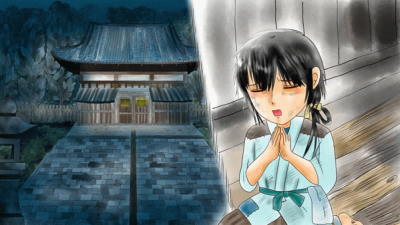
| むかしむかし、ある わかもの が、おてら で かんのんさま に おねがい を しました。 A long time ago, one young man prayed to Kannon, the goddess of Mercy at a temple. |
|
 |
|
| 「どうか、おかねもち に なれます ように」 “My god, please make me rich.” |
|
| すると、かんのんさま が いいました。 Then the Kannon appeared and said to him, |
|
| 「ここ を でて、はじめ に つかんだ もの が、おまえ を かねもち に してくれるだろう」 “The thing you first catch after you leave here will make you rich.” |
|
 |
|
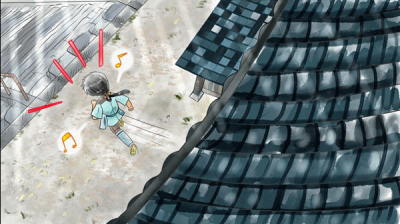
| よろこんだ わかもの は、おてら を でた とたん、 いし に つまずいて スッテン と ころびました。 The young man became happy to hear that, but he stumbled over a stone on leaving the temple. |
|
| そして その ひょうし に、いっぽん の わらしべ を つかみました。 And at the instant, he grabbed one straw. |
|
| 「かんのんさま が おっしゃった、はじめ に つかんだ ものって、これ の こと かなあ? “I wonder if this is the first thing I catch as the Kannon told me. |
|
 |
|
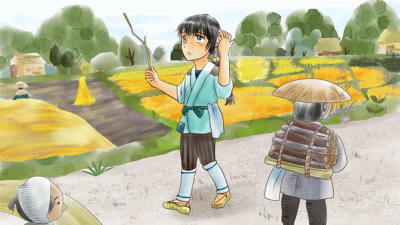
| とても、これ で かねもち に なる とは おもえない が」 I doubt I will be rich with this.” |
|
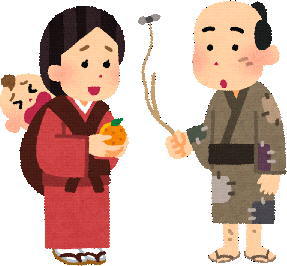
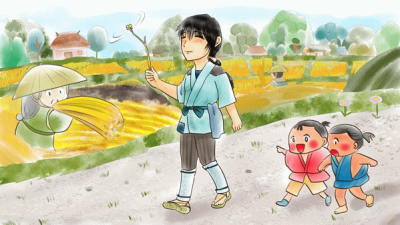
| わかもの が くび を ひねり ながら あるいて いると、 プーン と いっぴき の アブ が とんで きました。 As he was tilting his head and wondering, a horsefly flew to him. |
|
| わかもの は その アブ を つかまえる と、もっていた わらしべ に むすんで あそんで いました。 He caught the horsefly and played tying it on the straw |
|
 |
|
| すると むこう から りっぱ な ぎっしゃ が やってきて、なか に のっている こども が いいました。 Then one fine oxcart came close to him and a kid inside the cart said to him, |
|
| 「あの アブ が、ほしい よう」 “I want that horsefly.” |
|
| 「ああ、いいとも」 “Sure. Here you are.” |
|
 |
|
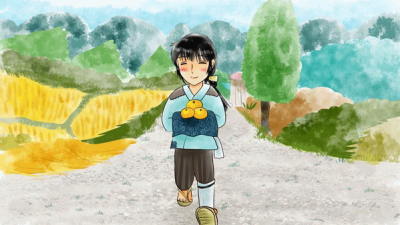
| わかもの が こども に アブ を むすんだ わらしべ を あげる と、 けらい の もの が おれい に ミカン を みっつ くれました。 As he gave the straw with a horsefly to the kid, the retainer gave him three oranges in return. |
|
| 「わらしべ が、ミカン に なったな」 “A straw became three oranges.” |
|
| また あるいて いる と、みちばた で おんなのひと が、 のど が かわいた と いって くるしんで います。 He began walking again, and he found a woman on the road suffering from thirst. |
|
| 「さあ、みず の かわり に、この ミカン を どうぞ」 “Here, take this oranges instead of water.” |
|
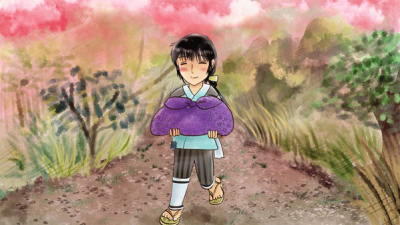
| おんなのひと は ミカン を たべて、げんき に なりました。 The woman recovered after she ate those oranges. |
|
| そして おれい にと、うつくしい ぬの を くれました。 She gave him a beautiful cloth in return. |
|
 |
|
| 「こんど は、ミカン が ぬの に なったな」 “This time, three oranges became a cloth.” |
|
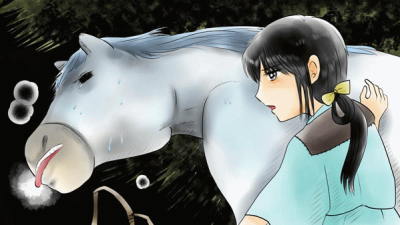
| わかもの が その ぬの を もって あるいて いると、 ウマ が たおれて こまって いる おとこのひと が いました。 As he was walking with the cloth, he found a man having a trouble over his sick horse. |
|
| 「どうしました?」 “What’s the matter?” |
|
 |
|
| 「ウマ が びょうき で たおれて しまった のです。 “My horse was down for his sickness. |
|
| まち に いって ぬの と こうかん する よてい だった のに。 I was going to go to a town to exchange this horse for a cloth. |
|
| きょうじゅう に ぬの を て に いれない と、こまる の です」 I will be in trouble if I don’t get a cloth today.” |
|
| 「では、この ぬの と ウマ を こうかん して あげましょうか?」 “Would you like to exchange this cloth for your horse?” |
|
| わかもの が いう と、おとこのひと は おおよろこび で ぬの を もって かえりました。 When he suggested, the man took the cloth back with delight. |
|
| わかもの が ウマ に みず を やったり からだ を さすったり すると、 ウマ は たちまち げんき に なりました。 After he took care of the horse watering and rubbing the body, the horse got well soon. |
|
| よく みる と、たいへん りっぱ な ウマ です。 Looking closely, it was a quite fine horse. |
|
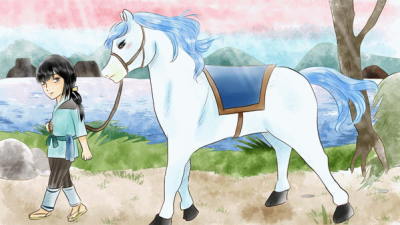
| 「こんど は ぬの が、ウマ に なったな」 “Now a cloth became a horse.” |
|
 |
|
| その ウマ を つれて、また わかもの が あるいて いると、 こんど は ひっこし を している いえ が ありました。 As he was walking with the horse, he found a house taking place a move. |
|
| そして そこ の しゅじん が、わかもの の りっぱ な ウマ を みて いいました。 When the master of the house saw his fine horse, he said to him, |
|
| 「きゅう に たび に でる こと に なって ウマ が ひつよう なの じゃが、 “I have to go on a trip all of a sudden and I need a horse. |
|
| その ウマ を わし の いえ や はたけ と こうかん して もらえない かね」 Would you possibly exchange your horse for my house and field ?” |
|
| わかもの は りっぱ な いえ と ひろい はたけ を もらって、おおがねもち に なりました。 The young man received a nice house and a large field, and became rich after all. |
|
 |
|
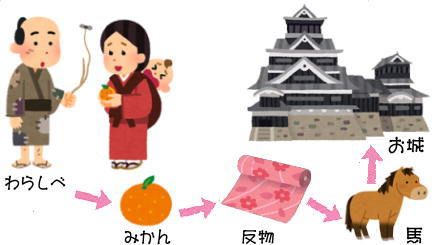
| いっぽん の わらしべ から おおがねもち に なった ので、 みんな は この わかもの を 『わらしべちょうじゃ』と よびました。 Because one straw made him a very rich man, people called him “the straw millionaire. |
|
| おしまい The end |
|
| ワンポイントアドバイス One-point Advice |
|
| 長者(ちょうじゃ)とは、裕福な人をさす言葉で、要するにお金持ちの事です。 何かの商売で成功した人には、その商売の名前を取って、○○長者と呼ばれます。 お金があって、生活に不自由がないので、歌や俳句を作ったり、 囲碁や将棋をして、気楽に暮らしている人が多かったそうです。 |
|
| 例 炭焼長者、材木長者、麦長者 | |
| 福娘童話集からお借りしました。 | |